Thursday, June 16, 2011
California sunshine
For a professed non-baker, the number of cake posts seems to be increasing rather fast, but that's just too bad - or good. For a dessert last week I made one I found years ago in a US vegetarian cookbook. (I kept only this one recipe and have since lost the book, so I can't recall who wrote it.) I know New Zealand oranges are really out of season, but as it's a Californian recipe, I thought it would be okay to use Californian oranges.
The original quantities contain mysterious US measurements like "a stick of butter" (about 60 grams, so my American friends tell me). The recipe also specifies " "buttermilk" (I use half milk and half plain yoghurt) and "pastry flour", which is apparently halfway between "cake flour" (only 8 to 9 percent protein) and normal flour (11% protein or more). We don't have either cake flour or pastry flour - well, I've never seen any here - but I just use normal standard flour and it seems to work fine.
Californian orange and raisin cake
2 oranges
1 cup seedless raisins
60 g butter
1 cup white sugar
2 eggs
1 tsp salt
1/3 cup milk, mixed with 1/3 cup plain yoghurt
2 cups sifted white flour
1 tsp baking soda
another 1/4 cup white sugar
1/4 cup orange flavoured liqueur (I use a cheapish triple sec, it's less sweet)
- Set oven to 180C.
- Prepare cake tin - a well greased ring tin carefully lined with paper on the bottom works well, or use a medium-sized square tin lined with baking paper - have it coming up the sides and extending a little beyond the rim so you can lift the cake out easily later.
- Juice the oranges, strain juice and set it aside. Grind the two orange rinds in a food processor with the raisins.
- Add all other ingredients except the orange juice, and process just to combine.
- Spread evenly in tin and bake for about 45 minutes - a square tin takes a little longer - until a skewer ot thin knife inserted in the middle comes out clean.
- While cake is baking, mix 3/4 cup of the orange juice, the second 1/4 cup sugar, and the liqueur in a jug.
As soon as the cake comes out of the oven, spoon this liquid evenly all over the top.
- When the cake is almost cold and has absorbed the liquid, either lift it carefully out of the square tin using the bake paper, or for a ring tin, turn it carefully out onto a plate and then immediately invert it onto another plate so the top is again on top.
It has a really fruity, moist texture and tastes beautifully orangey, but not too sweet - I use less sugar than the original recipe. I'm afraid this is the last slice (yes, once again I forgot to snap it before we ate it), and it's a bit fuzzy - the photo, not the cake. If you have leftover cake, keep it in the fridge and take it out ahead of time, or warm it up gently, if you want to serve it for dessert - it shouldn't be eaten really cold. You can serve it with whipped cream, slightly flavoured with orange liqueur, or with yoghurt - vanilla is nice.
Thursday, June 9, 2011
Such a simple lemon cake...
Now this post will probably be of no use to all those savvy readers who've been making this cake ever since they could first say "Alison Holst". But as I thought there just might be someone out there who hadn't heard about it, and it's the only cake I set out to make that never, ever goes wrong, I thought it would be worth writing about. I got some free lemons from my friends from Linton, and I needed something to serve as dessert, so I made it for Monday night. I originally got the recipe from Ali, but she says it's really from the other Alison. The ingredients are listed in the order you use them.
Lemon Yoghurt Cake
1 and 3/4 cups sugar (I cut this down a little to 1 and 1/2)
rind of two medium lemons
2 eggs
1 cup oil
1/2 tsp salt
1 cup yoghurt (any kind, plain or sweetened, though of course lemon is good - but more expensive)
2 to 3 tbsp lemon juice
2 cups self-raising flour
Set oven to 180C. Grease and flour cake tin - a ring tin with baking paper on the bottom works well. Or else just put baking paper into a square tin.
Put sugar and lemon rind into food processor bowl. Process until completely combined.
Add eggs, oil and salt. Process until thick and smooth.
Add yoghurt and lemon juice and process to mix.
Add flour and process briefly, just to combine.
Pour into tin and bake at 180C for about 40 minutes, until a skewer inserted in the middle comes out clean. (A square tin may take a bit longer.) Cool for 10 minutes before removing from tin.
Serve with icing sugar sieved over the top, and/or either whipped cream or plain or lemon yoghurt or lemon sorbet.

Lemon Yoghurt Cake
1 and 3/4 cups sugar (I cut this down a little to 1 and 1/2)
rind of two medium lemons
2 eggs
1 cup oil
1/2 tsp salt
1 cup yoghurt (any kind, plain or sweetened, though of course lemon is good - but more expensive)
2 to 3 tbsp lemon juice
2 cups self-raising flour
Set oven to 180C. Grease and flour cake tin - a ring tin with baking paper on the bottom works well. Or else just put baking paper into a square tin.
Put sugar and lemon rind into food processor bowl. Process until completely combined.
Add eggs, oil and salt. Process until thick and smooth.
Add yoghurt and lemon juice and process to mix.
Add flour and process briefly, just to combine.
Pour into tin and bake at 180C for about 40 minutes, until a skewer inserted in the middle comes out clean. (A square tin may take a bit longer.) Cool for 10 minutes before removing from tin.
Serve with icing sugar sieved over the top, and/or either whipped cream or plain or lemon yoghurt or lemon sorbet.
As you can see, it's still a tiny bit damp at the bottom - I was in a hurry and took it out of the oven slightly too soon - but as it was for dessert, that didn't matter in the slightest. I served it with a quick syrup made from lemon curd heated up with a little juice and water.
Thursday, June 2, 2011
A little of what you fancy does you good
What shall I eat? Food, of course - but what kind of food? I know this looks like a silly question, and that I'm very lucky to even be able to ask it. But ever since I started cooking, which was several decades ago, after I got married the first time, I've had some sort of framework for deciding what to make for dinner (breakfast is pretty much routine, and lunch often seems to take care of itself). And that framework has always involved cooking for other people as well as myself. I did enjoy what I made - but what I personally wanted to eat was almost never the main thing I thought about when I was deciding what we would have.
Of course, after the boys left home, there would be the odd stretch of time when Harvey was away, but I tended to have a few set things I always made then because I liked them and he didn't - things like vege curry and some Albanian dishes. He was the same when I was away, he'd indulge in pickled pork and tinned tongue and those round beef roasts stuck together with skewers.
But now it's a different story. I'm just not used to having only myself and my own preferences to consider. Quite often, of course, I'm having one or more people to dinner, and making what I think will work for them, and then there are usually leftovers and I eat them quite happily. But otherwise it's really odd how difficult it can seem to decide what I actually do want to eat. There's always cost to consider - I'm not rushing off to buy fillet steak or blue cod every day, not that I'd want to anyway. Still, within reasonably broad limits, I can get what I want - if I could only know what that was...
I've started trying to pay attention when I have even a slight yen for something. I find that when I do manage to work out what I'd like at that time, and go to the effort of getting and making it, I enjoy it much more than when I just vaguely make do with whatever seems easiest or happens to be on special. And now and then it's actually okay to throw away the last helping of something that won't freeze well, or wasn't all that nice to start with, or I really don't want to have again, and get something fresh to eat instead - or just have a poached egg, if that's what I fancy.
PS - to Susan who posted a comment on Saturday on my Lois Daish post, asking for Gina'a no-knead bread - I have the recipe and have put it up on that post for you to see. Must try it out myself!
Of course, after the boys left home, there would be the odd stretch of time when Harvey was away, but I tended to have a few set things I always made then because I liked them and he didn't - things like vege curry and some Albanian dishes. He was the same when I was away, he'd indulge in pickled pork and tinned tongue and those round beef roasts stuck together with skewers.
But now it's a different story. I'm just not used to having only myself and my own preferences to consider. Quite often, of course, I'm having one or more people to dinner, and making what I think will work for them, and then there are usually leftovers and I eat them quite happily. But otherwise it's really odd how difficult it can seem to decide what I actually do want to eat. There's always cost to consider - I'm not rushing off to buy fillet steak or blue cod every day, not that I'd want to anyway. Still, within reasonably broad limits, I can get what I want - if I could only know what that was...
I've started trying to pay attention when I have even a slight yen for something. I find that when I do manage to work out what I'd like at that time, and go to the effort of getting and making it, I enjoy it much more than when I just vaguely make do with whatever seems easiest or happens to be on special. And now and then it's actually okay to throw away the last helping of something that won't freeze well, or wasn't all that nice to start with, or I really don't want to have again, and get something fresh to eat instead - or just have a poached egg, if that's what I fancy.
PS - to Susan who posted a comment on Saturday on my Lois Daish post, asking for Gina'a no-knead bread - I have the recipe and have put it up on that post for you to see. Must try it out myself!
Thursday, May 26, 2011
Persimmon pudding
Tonight I was having dinner brought to me by friends - all I was responsible for was dessert. The glowing orange persimmons at the greengrocer reminded me that I have Fran's brilliant recipe for persimmon pudding, so I made that. You put together three separate mixtures, then combine them.
Fran's persimmon pudding
Heat oven to 180C.
Make
1 cup persimmon puree (peel, cut up, removing seedy part, and puree in blender or processor - my persimmons were a little too firm, so I added a couple of slightly squishy feijoas)
and add
1 tsp baking soda.
In a large bowl, mix:
1 cup flour
1 cup sugar
1 tsp cinnamon
pinch of salt
and add
1 tsp baking soda.
In a small bowl, mix:
1 beaten egg
1/2 cup milk
1 tsp lemon juice
1 tsp vanilla.
Add puree and egg mixture alternately to dry ingredients, mixing well, then add:
1 tbsp melted butter
1/2 cup currants or raisins
1/2 cup nuts - macadamia or pecan or walnut
(I used raisins and walnuts - I had a big bowl of those from Fran's tree at Waikanae.)
Line light square baking tin with baking paper, or use individual ramekins.
Pour in mixture and cook at 180C for 15 minutes.
Dust with a mix of caster sugar and cinnamon.
Bake another 15 minutes, until a skewer comes out clean.
Leave to cool until warm, before serving with cream or custard, and if you like, some slices of lightly poached persimmon on the side.
This pudding has a beautiful rich warm colour and tastes faintly mysterious - if you don't tell people what it's made of, they're unlikely to guess. A delicious early winter special.
Saturday, May 21, 2011
Buying dinner
This post is a little late - it's been a busy week. As I was going to be occupied on the evening of my birthday (see Elsewoman), I arranged to have my French friend Diane to dinner on Wednesday. But I knew I wouldn't have much time to cook, as I had some work due, and my neighbour Frances had invited us for drinks before dinner. A trip to Moore Wilson was clearly called for. Here's what I bought.
Fresh prawn cutlets, to cook with pasta for a main course (Frances's nibbles would do nicely for a starter).
I fried them quickly in butter, took them out and reduced some vermouth, added lime and lemon juice, put the prawns back and cooked them gently a little longer, stirred in a bit of chilli jam and some fresh coriander, finished the sauce off with fresh cream, and added a little more finely chopped coriander and black pepper just before serving.
Vermouth - Noilly Prat cost only slightly more than Martini, and I love using it with seafood - as well as a gorgeous green broccoflower, four different kinds of pears and a new tin of smoked paprika. The slice of goat's cheese came from Gamboni's, our brilliant Karori deli - we had a tiny bit for the obligatory French cheese course, after a salad of the very last of my garden lettuce (I know I should have planted some more while it was so warm this month, but I didn't).
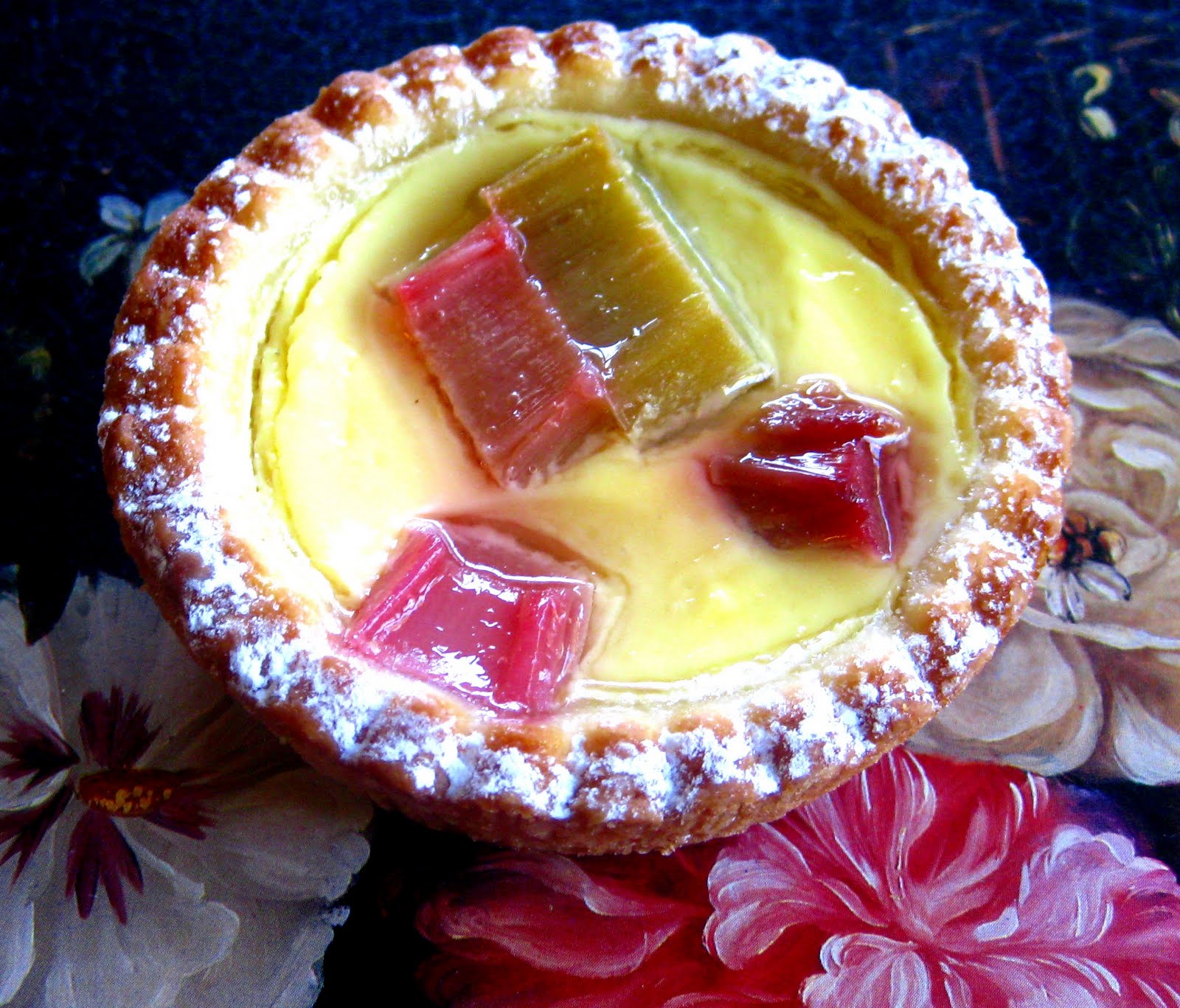
For dessert we had Arobake rhubarb tart, then peppermint tea with the little biscuits Diane brought.
Since then (see Elsewoman!) I've done little else but eat, as kind friends treated me for my birthday (they know me all too well, obviously). This can't go on (she said feebly, reaching for the last chocolate). Well, only till Monday. Then I will live on nothing but salads and scraps and water for a while.
Fresh prawn cutlets, to cook with pasta for a main course (Frances's nibbles would do nicely for a starter).
I fried them quickly in butter, took them out and reduced some vermouth, added lime and lemon juice, put the prawns back and cooked them gently a little longer, stirred in a bit of chilli jam and some fresh coriander, finished the sauce off with fresh cream, and added a little more finely chopped coriander and black pepper just before serving.
Vermouth - Noilly Prat cost only slightly more than Martini, and I love using it with seafood - as well as a gorgeous green broccoflower, four different kinds of pears and a new tin of smoked paprika. The slice of goat's cheese came from Gamboni's, our brilliant Karori deli - we had a tiny bit for the obligatory French cheese course, after a salad of the very last of my garden lettuce (I know I should have planted some more while it was so warm this month, but I didn't).
For dessert we had Arobake rhubarb tart, then peppermint tea with the little biscuits Diane brought.
Since then (see Elsewoman!) I've done little else but eat, as kind friends treated me for my birthday (they know me all too well, obviously). This can't go on (she said feebly, reaching for the last chocolate). Well, only till Monday. Then I will live on nothing but salads and scraps and water for a while.
Saturday, May 14, 2011
Bone with a hole - osso buco
The first time I went overseas with Harvey was to Sydney, in 1981. I'd never been to Australia, and was a bit overwhelmed by the food. Harvey wanted to go to an Italian restaurant he'd been to before. I can't remember its name, but it seemed very authentic - too much so for me. It was large and noisy and had a vast, multipage Italian menu that completely baffled me, partly because I could barely read its curly brown type in the dim light.
Harvey knew exactly what he wanted - mussels, followed by saltimbocca. I wasn't impressed by the idea of mussels, because I thought they'd be like the giant New Zealand ones, and I wasn't sure what saltimbocca was. So I chose two things I'd often heard of, but never had - minestrone and osso buco.
I didn't enjoy my foolish combination of two very hearty, meaty dishes, and the bones in the osso buco were embarrassingly difficult to deal with. Meanwhile Harvey tied on a huge white bib and feasted on a big bowl of tiny black mussels cooked in white wine, completely different from the ones I'd had back home, followed by a delicate, delicious-looking combination of veal, ham and sage that lived up to its lovely name of jump-in-the-mouth.
I've made minestrone many times since, but never osso buco. Then before Christmas I found a neat package of the right cut of veal in Moore Wilson (remarkably cheap at $6.95), and bought it to freeze and make later for Harvey - I knew he'd enjoy it, and the Claudia Roden recipe (the modern version, with tomatoes - the older one didn't use them, it was more like a veal blanquette) looked remarkably simple.
Of course, I never got the chance to make it for him. But this week, with visitors due, I decided it was time to have a go.
Osso buco alla milanese
(from The Food of Italy, Claudia Roden)
4 thick slices of shin of veal, each cut with a piece of marrow bone in the middle
flour for dusting
50g butter, or less (I did use this much, but removed some later, it's a lot)
125 ml dry white wine
225g tomatoes, peeled and chopped (or a good quality can of crushed tomatoes)
meat stock or water
salt and pepper
For the gremolata:
4 tbsp finely chopped Italian flat-leaved parsley
1 tbsp finely grated lemon zest
1 small clove garlic, crushed
1 large anchovy, finely chopped
- Coat pieces of meat with flour and brown in butter on both sides. Add tomatoes and stock or water to cover, then season.
- Cook very gently with lid on for 1 and 1/2 to 2 hours, stirring occasionally to make sure it doesn't stick, until meat is so tender it comes away from the bone. (I used the slow cooker for this stage.) Add stock or water to keep meat covered at first, but sauce should be thick by the end.
- Make gremolata: mix parsley, lemon zest, garlic and anchovy, place a little on each piece of meat and cook a few minutes longer.
- Serve with risotto alla milanese or plain white rice.
The flavour and texture is beautifully smooth and rich without being too heavy, and the sharp gremolata offsets it perfectly. Buon appetito.
Harvey knew exactly what he wanted - mussels, followed by saltimbocca. I wasn't impressed by the idea of mussels, because I thought they'd be like the giant New Zealand ones, and I wasn't sure what saltimbocca was. So I chose two things I'd often heard of, but never had - minestrone and osso buco.
I didn't enjoy my foolish combination of two very hearty, meaty dishes, and the bones in the osso buco were embarrassingly difficult to deal with. Meanwhile Harvey tied on a huge white bib and feasted on a big bowl of tiny black mussels cooked in white wine, completely different from the ones I'd had back home, followed by a delicate, delicious-looking combination of veal, ham and sage that lived up to its lovely name of jump-in-the-mouth.
I've made minestrone many times since, but never osso buco. Then before Christmas I found a neat package of the right cut of veal in Moore Wilson (remarkably cheap at $6.95), and bought it to freeze and make later for Harvey - I knew he'd enjoy it, and the Claudia Roden recipe (the modern version, with tomatoes - the older one didn't use them, it was more like a veal blanquette) looked remarkably simple.
Of course, I never got the chance to make it for him. But this week, with visitors due, I decided it was time to have a go.
Osso buco alla milanese
(from The Food of Italy, Claudia Roden)
4 thick slices of shin of veal, each cut with a piece of marrow bone in the middle
flour for dusting
50g butter, or less (I did use this much, but removed some later, it's a lot)
125 ml dry white wine
225g tomatoes, peeled and chopped (or a good quality can of crushed tomatoes)
meat stock or water
salt and pepper
For the gremolata:
4 tbsp finely chopped Italian flat-leaved parsley
1 tbsp finely grated lemon zest
1 small clove garlic, crushed
1 large anchovy, finely chopped
- Coat pieces of meat with flour and brown in butter on both sides. Add tomatoes and stock or water to cover, then season.
- Cook very gently with lid on for 1 and 1/2 to 2 hours, stirring occasionally to make sure it doesn't stick, until meat is so tender it comes away from the bone. (I used the slow cooker for this stage.) Add stock or water to keep meat covered at first, but sauce should be thick by the end.
- Make gremolata: mix parsley, lemon zest, garlic and anchovy, place a little on each piece of meat and cook a few minutes longer.
- Serve with risotto alla milanese or plain white rice.
The flavour and texture is beautifully smooth and rich without being too heavy, and the sharp gremolata offsets it perfectly. Buon appetito.
Sunday, May 1, 2011
A Right Royal Nosh-up
Sadly, the invitation arrived too late. But in any case, I was already
booked for a Royal Wedding Dinner with friends.
According to a former royal chef's glossy cookbook, Eating Royally (I am not making this up), Buckingham palace menus are always written in French, and ours was no exception.
The sausages (tasty traditional pork, of course, from the local butcher) were arranged around the mash to make a lovely crown shape, topped with pea jewels and escorted by cabbage with peas, roast veges and onion gravy. Propped up behind is the welcoming picture on the back of the menu cards, standing in for our distant hosts. (I'm sure they would have preferred our sausages to chocolate biscuit cake.)
Dessert was a proper English trifle, with the right (generous) amount of sherry, decorated with the happy couple's crests surrounded by chocolate sprinkle hearts.
By the time we'd worked our way through all this, interrupted by occasional dashes to the telly to see well-known guests arriving at the Abbey (including Princess Eugenie and her hat, described by Rosemary McLeod as resembling an ancient contraceptive device - the Really Good Stuff was about to start.
(PS - Our eagle-eyed hostess has pointed out that the one in pink with that hat was Beatrice, Eugenie was the one in blue brocade.)
We oohed and aahed as the bride appeared, gasped as the ring got stuck (I suppose it Isn't Done for the bride to try it on first, but I admired how well the groom coped with this unforeseen crisis), and then welcomed the clever way our hostess filled the awkward gap before the Balcony Appearance with the promised friandises. And what magnificent little morsels they were.
To accompany them we had, naturally, the Queen's favourite tipple - a cup of tea. Just like us, and most of the guests, the teapot was properly dressed for the occasion.
After the second kiss, toasted with a glass of Deutz (proudly New Zealand, but also a better-sounding match for the German-descended Windsors than anything French), we called it a night - and a very good night it was too.
Subscribe to:
Posts (Atom)