
Harvey loved gooseberries - the greener the better, and not too much sugar. When he was ill he always asked whether they'd appeared in the shops. I was having two close friends for dinner last week, and I knew at least one of them (who grew up in England) loved gooseberries as much as Harvey did. There were only two punnets left at the greengrocer, so I carried them home and started hunting for a good recipe for gooseberry tart. They're a thoroughly English fruit - none of my French or American recipe books mention them. But a Guardian recipe by Hugh Fearnley-Whittingstall was exactly what I was looking for - except that he used strawberries as well, so I left those out. here's what he says about "goosegogs" (as they're known in some parts of England):
"Usually a soft, pale green, but sometimes golden,
or even tinged a gorgeous wine-red, these delicately bristled little fruits are
under-appreciated these days. I think this is because they require a little
work from the cook, beyond wash and gobble. But that is more than repaid by
what they give in return. Few summer fruits rival the goosegog when it comes to
complexity, depth and sheer zesty oomph. These characterful
berries have a long association with British cooking. Way back in the 1600s,
herbalist Nicholas Culpeper talked of them being scalded, baked or
eaten raw; there are recipes for them in Hannah Glasse's Art Of Cookery (1747), in Eliza Acton's Modern Cookery (1845) and Mrs Beeton's Book Of Household Management (1861). Gooseberry wine,
gooseberry sauce, gooseberry pudding, gooseberry jam and jelly: these simple
dishes are gifts from a time when richness of flavour was appreciated as
much as sweetness. That flavour is liberated by just the right amount of sugar;
always be ready to reach for a little more caster sugar if the cooked fruit is
coming up a bit tart…"
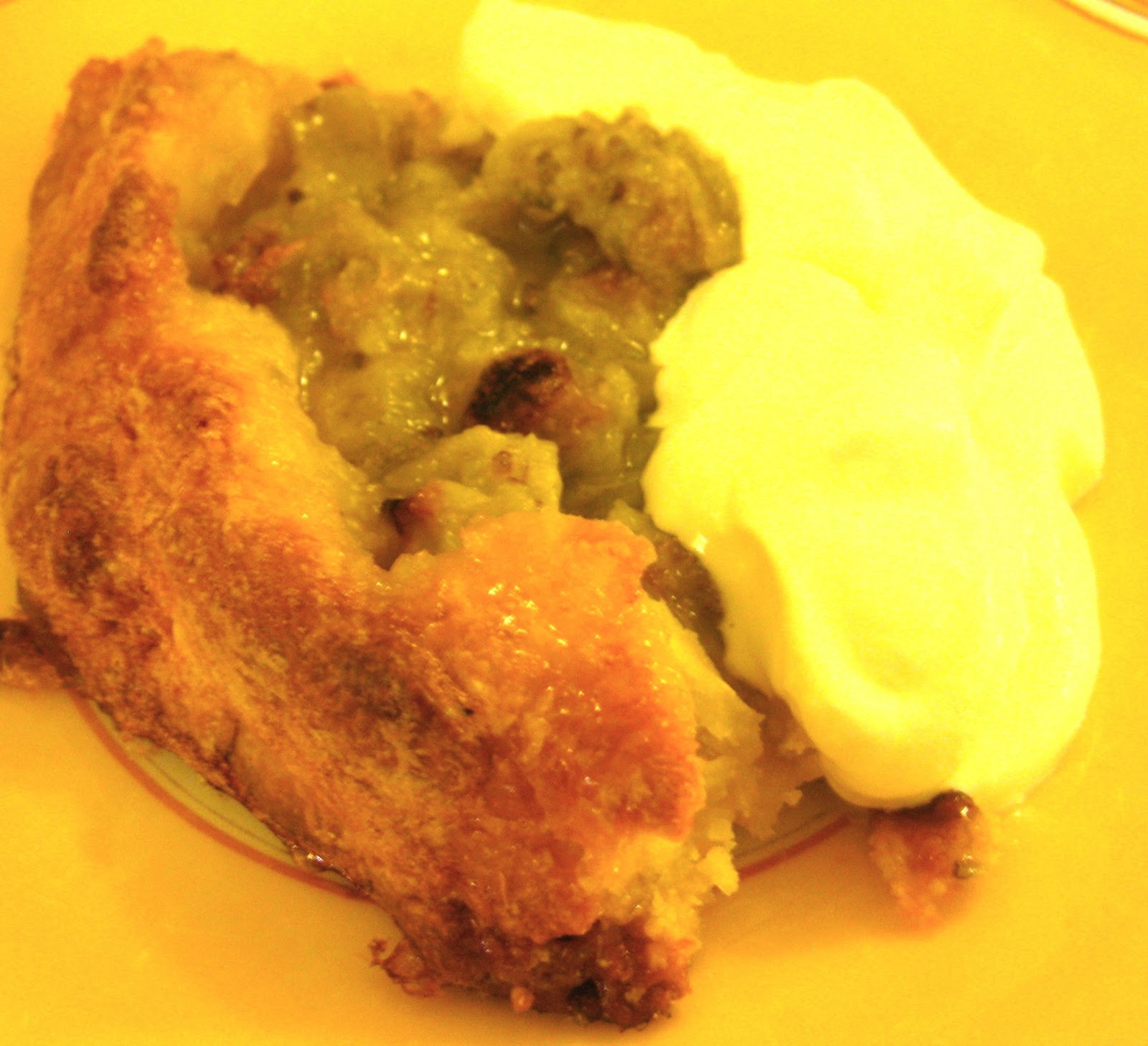
Here's my adaptation of his recipe for gooseberries alone – 300g green gooseberries leaves plenty of pastry to curl over the edge. For the pastry, I used the sweet short pastry recipe from Sebastien Lambert at Le Cordon Bleu school in Wellington.
Gooseberry tart
300g gooseberries
85g caster sugar, plus a little extra
to finish
Finely grated zest of 1 lemon
3 tbsp ground almonds
1 egg white, lightly beaten
Finely grated zest of 1 lemon
3 tbsp ground almonds
1 egg white, lightly beaten
Top and tail the gooseberries - cut off the tiny tip at the top and the little black remains of the flower on the tail - with a sharp small knife. Combine the berries, sugar and lemon zest in a glass or china bowl, and
set aside to macerate for 30 minutes.
Heat the oven to
200C on "bake" (don't use the fan). Line a large baking tray with baking parchment or nonstick
liner – use a tray with a slight edge, as the tart may leak juice while baking.
On a floured surface, roll out the pastry to a
rough circle, 2-3mm thick and about 35cm in diameter, and transfer to the
baking tray. Sprinkle the ground almonds evenly over the pastry without going
right to the edges.
Spoon the macerated fruit, and any juices, over the pastry,
leaving a 3-4cm border. Fold the border inwards over the fruit all around. Brush the
pastry edges with the egg white and sprinkle with more caster sugar. Bake for
30 minutes, or until the pastry is a deep gold (my oven took 25 minutes and even that was a fraction too long). Serve warm, with cream or ice-cream.

They loved it, and Harvey would have too, because there wasn't too much sugar. But these were very green berries, some quite small and hard - you'd need a bit less sugar for larger, riper ones. In theory this tart serves four, but there was only a little bit left. So I ate it for breakfast.


 Posts
Posts


